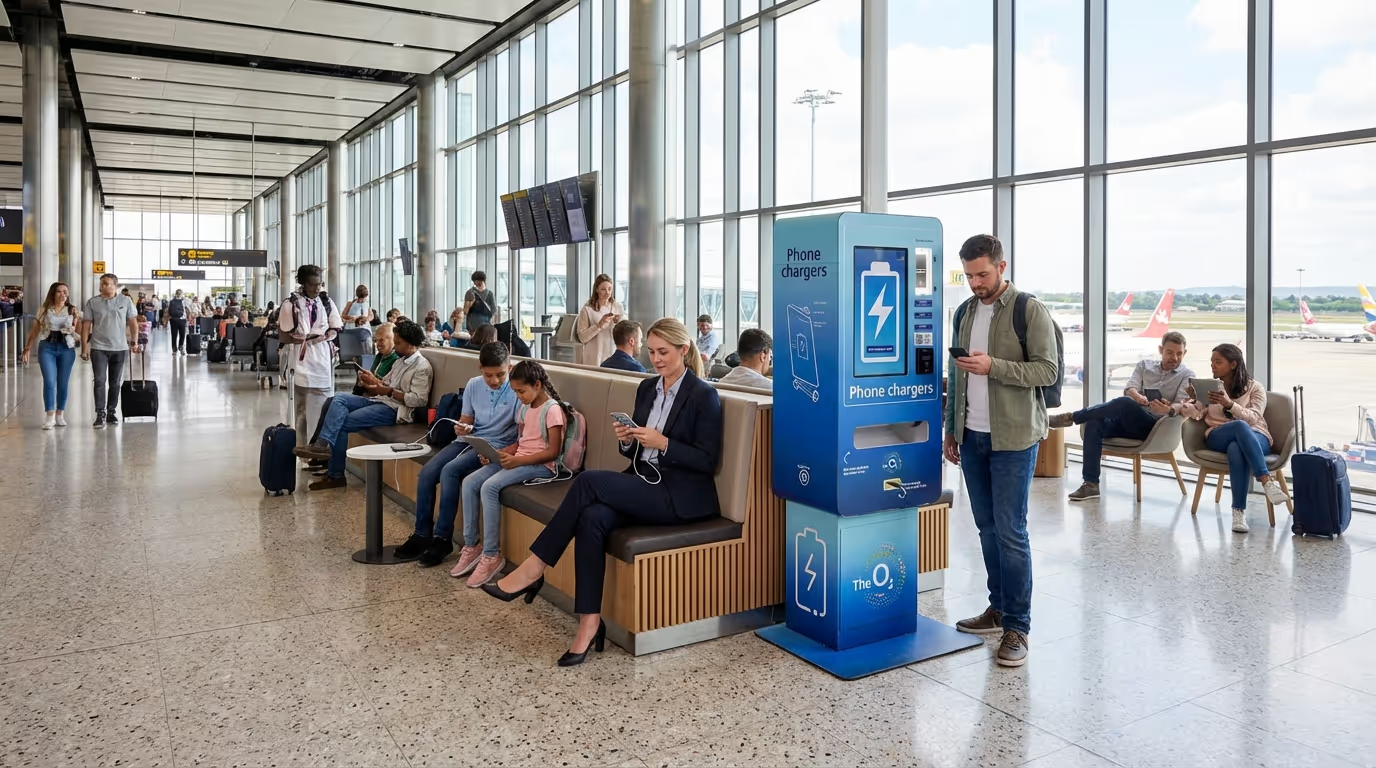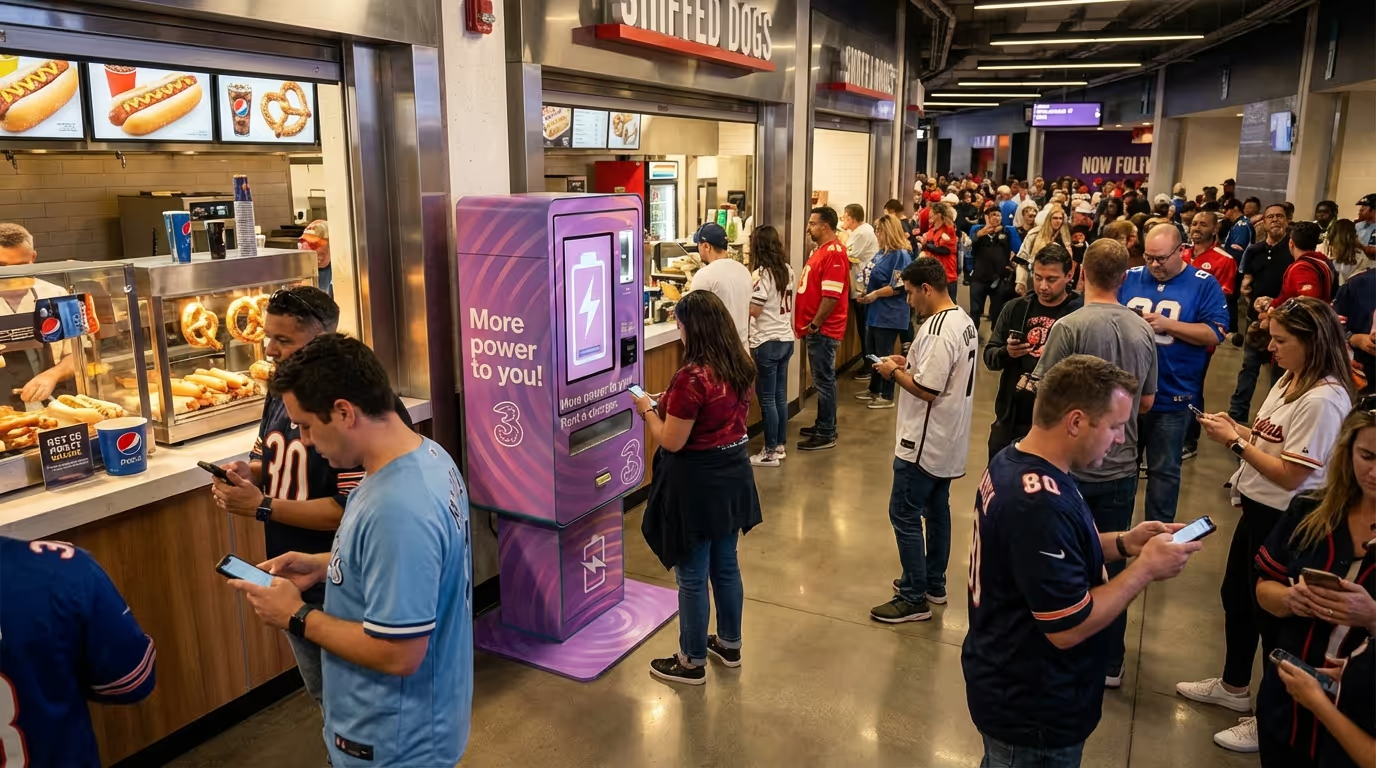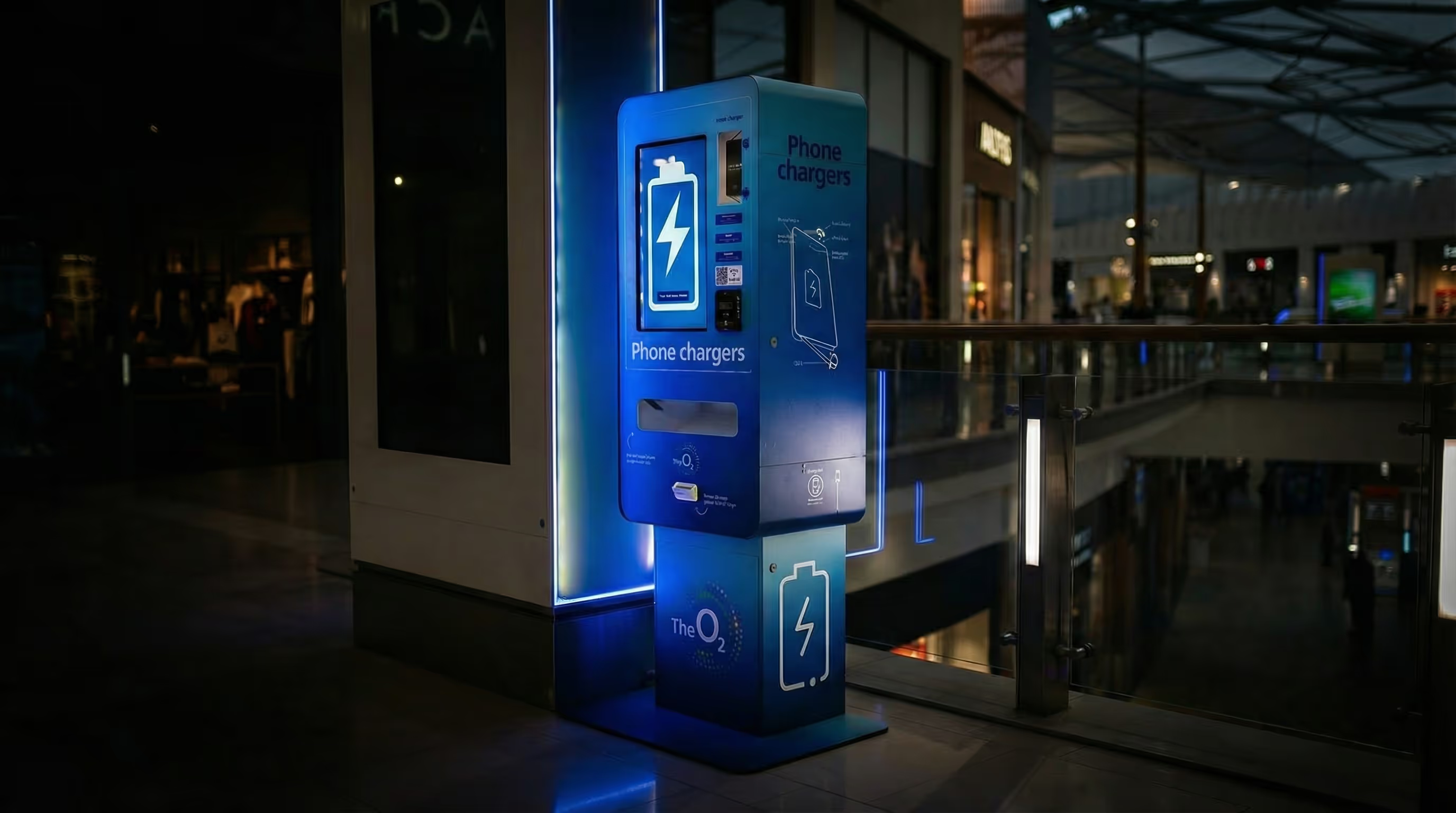
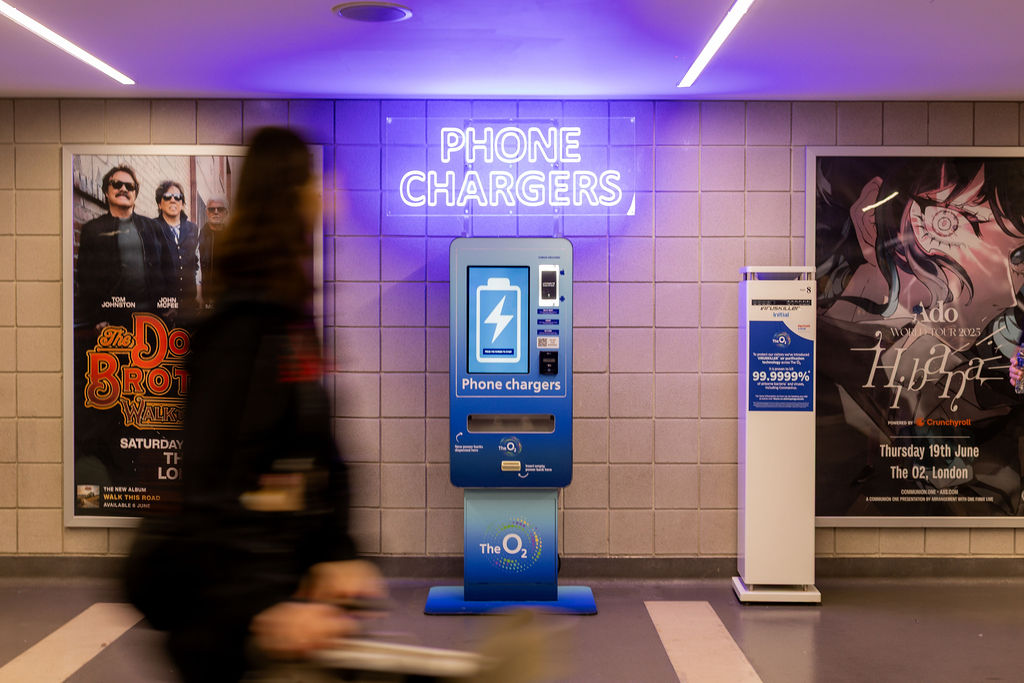
A dead phone is a lost sale. It sounds simple, but the commercial implications for UK stadiums and arenas are substantial. When a fan's battery hits zero, they lose access to the mobile app. With it goes the ability to order food and drink from their seat, redeem loyalty offers, or share content that drives footfall to your merchandise stands. The phone is no longer just a communication device at a live event. It is the primary commercial interface between your venue and your audience.
This article makes the revenue case for phone charging infrastructure in UK stadiums and arenas, focusing on three commercial levers: app-based ordering dependency, social amplification, and their compounding effect on spend per head.
The core argument: venues that invest in keeping fans charged are investing directly in their own revenue per head, because the modern fan's spending capacity is inseparable from their phone's battery life.
It is a case Lifesaver Power has been making in practice, deployed across The O2, Edgbaston, Silverstone, and PDC events.
The Mobile Phone Is Now Your Venue's Primary Revenue Channel
Stadium and arena commercial teams have spent years building app ecosystems: seat-side ordering, digital loyalty programmes, cashless payments, push notifications for half-time offers. The investment is substantial. But every one of these systems shares a structural vulnerability — they all require a charged phone to function.
According to research by Boldyn Networks, 81% of event-goers say they would spend more if convenient ordering options were available. A further 57% would spend more specifically if they could order from their seats. These figures represent an enormous revenue opportunity, but only for fans whose phones are working.
The same research found that 77% of event-goers actively dislike poor mobile coverage at venues. Battery failure is the most personal form of connectivity loss. Even with perfect network coverage, a fan on 3% battery is functionally offline. They cannot order, cannot browse, and cannot respond to a push notification telling them the half-time deal expires in ten minutes.
App-Based Ordering: The Revenue Engine That Needs Power to Run
The shift to app-based ordering in UK venues is not a trend. It is an established commercial infrastructure. Clubs and venues have invested heavily in digital ordering platforms precisely because they work: they reduce queue friction, increase order frequency, and enable upselling at scale.
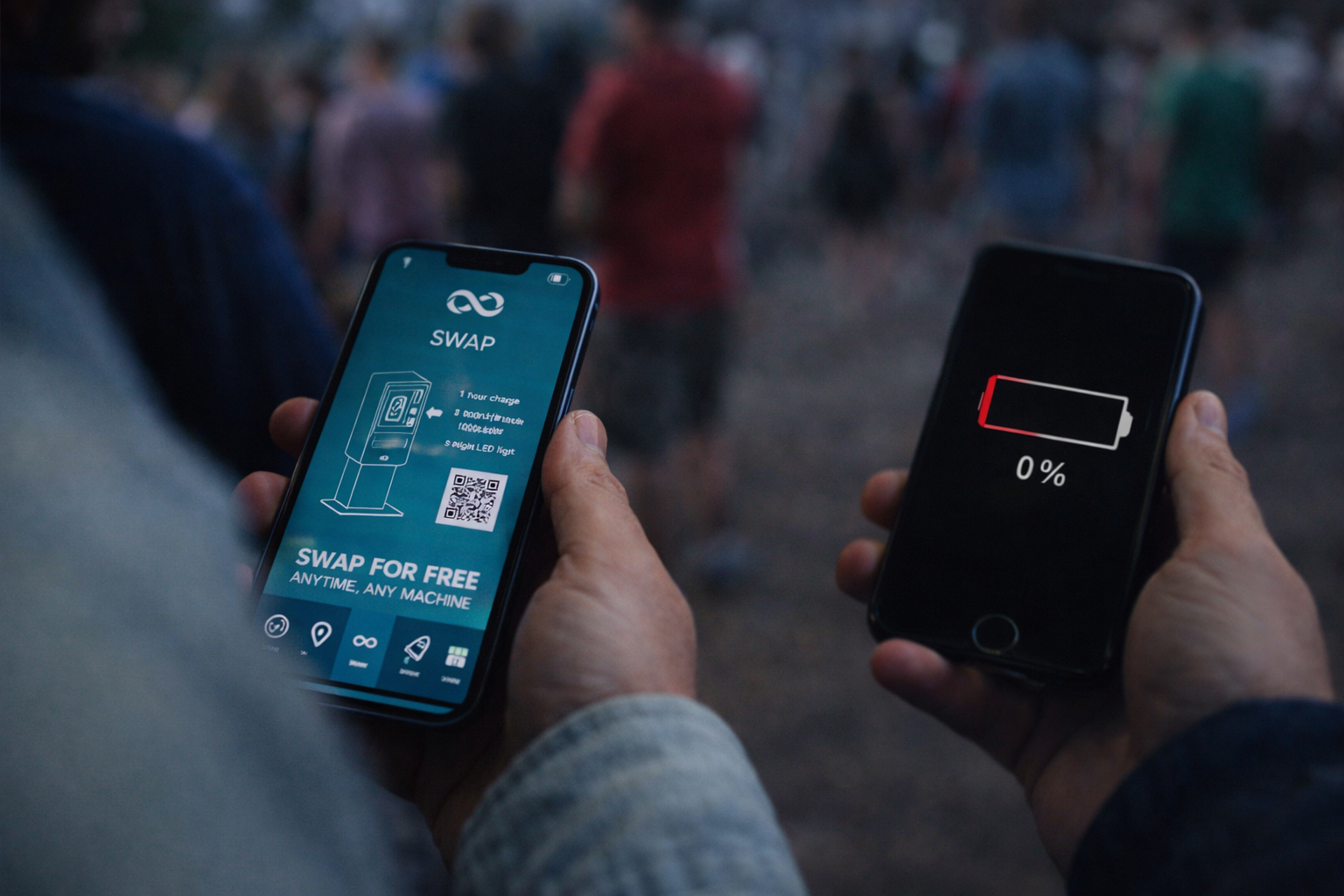
The commercial logic is straightforward:
- No queue friction means fans order more often and in larger quantities
- Push notifications allow venues to promote deals at peak spending moments: half-time, interval, pre-show
- Cashierless checkout facilitates impulse purchases that would be abandoned at a physical queue
- Order history and loyalty data enables personalised offers that improve conversion rates
A fan who cannot access the app does not simply order differently. They often do not order at all, or order significantly less. The revenue loss is not marginal: it is the difference between a fan who spends once at a kiosk and one who spends three times through an app.
"Fast and reliable connectivity is required to enable both transformation of the fan experience and for the creation of new revenue streams for venues." — Paul Osborne, Chief Commercial Officer, Boldyn Networks
The point applies equally to battery power. Connectivity infrastructure and charging infrastructure are two sides of the same commercial coin.
Social Amplification: The Revenue That Happens After the Final Whistle
Spend per head is typically measured within the venue, on the day. But the commercial value of a fan's phone extends well beyond the turnstile. Every piece of content a fan shares during an event (a goal celebration, a half-time atmosphere video, a post about the food) is organic marketing that drives future ticket and merchandise sales.
This is not a peripheral benefit. It is a measurable commercial asset.
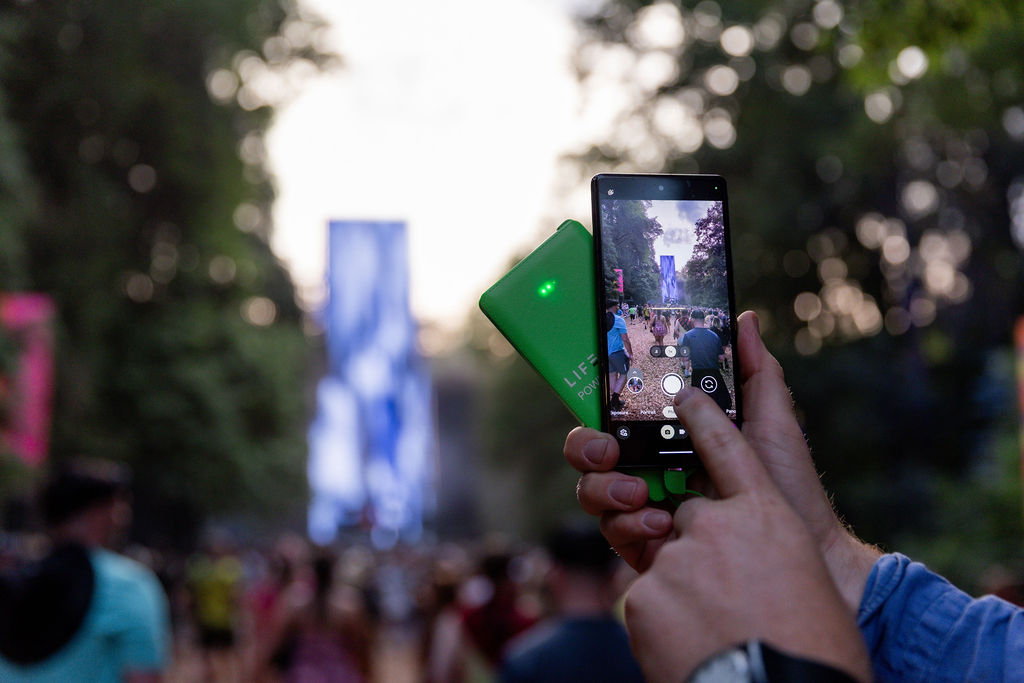
Research from Telecoming found that 75% of European sports fans use mobile apps to follow their teams, with younger fans driving the highest commercial engagement. That cohort is also the most prolific content creators. A single viral clip of stadium atmosphere can generate thousands of impressions and measurable ticket demand. That content only gets created and shared if the fan has a charged phone.
What fans share, and why it matters commercially:
Content type
Commercial impact
Atmosphere and crowd videos
Drives ticket demand for future fixtures
Food and hospitality posts
Increases F&B spend expectations and aspirational visits
Merchandise photos
Directly influences merchandise purchases by followers
Goal and highlight clips
Builds emotional connection that correlates with loyalty spend
The commercial loop extends further still. During the UEFA Euro 2020 tournament, organisers distributed over 300 targeted sales campaigns through their mobile app, using fan behaviour data to personalise offers in real time. Sports mobile apps now generate billions in annual revenue globally. The prerequisite for all of it is a fan with a charged device.
The Spend Per Head Equation: How Charging Infrastructure Closes the Loop
The commercial case for phone charging infrastructure is not about convenience. It is about protecting the revenue that venue operators have already invested in building.
Consider the chain of events when a fan's phone battery runs low during an event:
- App access is lost. Seat-side ordering, loyalty offers, and push notifications all become inaccessible.
- Ordering frequency drops. The fan reverts to physical queues, where transaction values are lower and queue aversion reduces order frequency.
- Social sharing stops. No content is created or shared during the most commercially valuable window of the event.
- Targeted campaign reach shrinks. The fan cannot receive or respond to real-time marketing pushes.
- Post-event engagement falls. Low battery fans are less likely to complete surveys, loyalty interactions, or online merchandise purchases.
Each step represents a measurable reduction in spend per head. A £1 uplift in average spend per head across a 50,000-capacity stadium represents £50,000 per event. The inverse is equally true: a £1 reduction, driven by fans losing app access mid-event, costs the same. Where a significant proportion of fans experience battery anxiety during a three-hour event, that figure is not theoretical.
What "Battery Anxiety" Costs a Venue
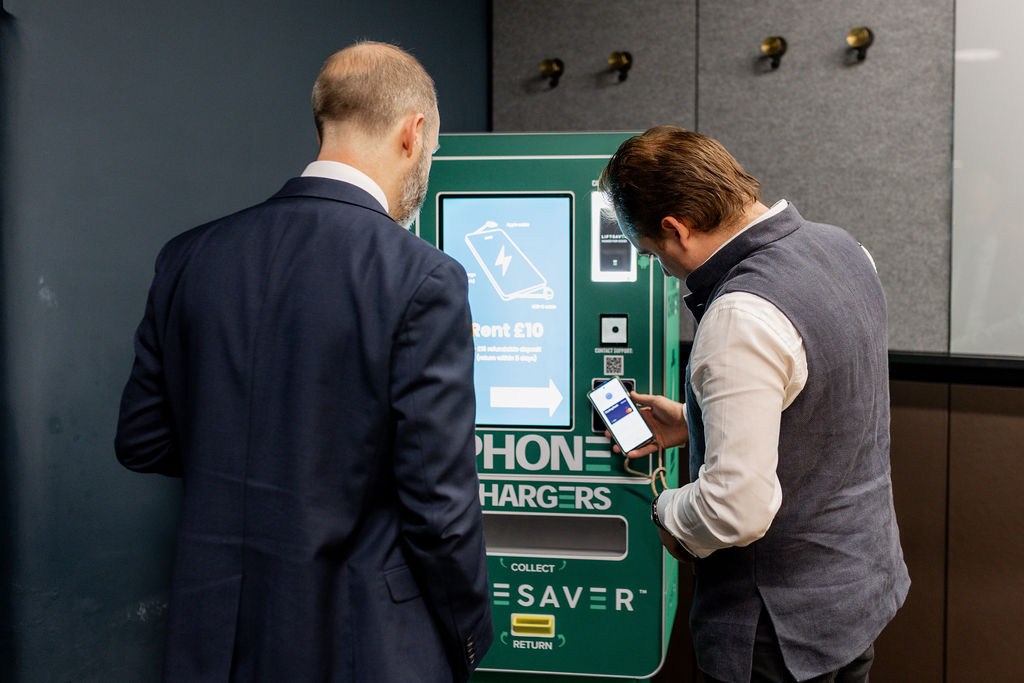
Battery anxiety is the behavioural shift that occurs when a fan's phone drops below 20%. Fans begin conserving battery rather than spending it: they stop filming, stop ordering through apps, and stop engaging with push notifications. The spending window closes before the event ends.
This is not a niche problem. Smartphone usage during live events is intensive. Fans are streaming, messaging, posting, ordering, and navigating — all on a device that may have been in heavy use since morning. For evening events, many fans arrive with limited charge remaining from the working day.
Venues that provide charging infrastructure keep fans commercially active for the full duration of the event. Higher sustained app engagement translates directly to higher order frequency, larger basket sizes, and a wider addressable audience for real-time campaigns. The revenue protection case is straightforward: a charged fan is a spending fan.
Key Takeaways
The relationship between phone charging and spend per head runs through three concrete, measurable channels:
1. App-based ordering. 81% of fans would spend more with convenient ordering options; 57% specifically want to order from their seats. Both require a charged phone.
2. Social amplification. 25% of fans post on social media during events. That content drives future ticket demand, merchandise sales, and brand equity. It stops when the battery dies.
3. Targeted campaign activation. Real-time push notifications, loyalty offers, and personalised promotions land on fans who are actively engaged with their phones. Dead batteries remove fans from the addressable audience entirely.
Charging infrastructure is the physical layer that keeps your digital revenue infrastructure switched on. To see how Lifesaver Power deploys across UK stadiums and arenas, visit the venues page or get in touch with the team.
A dead phone is a lost sale. It sounds simple, but the commercial implications for UK stadiums and arenas are substantial. When a fan's battery hits zero, they lose access to the mobile app. With it goes the ability to order food and drink from their seat, redeem loyalty offers, or share content that drives footfall to your merchandise stands. The phone is no longer just a communication device at a live event. It is the primary commercial interface between your venue and your audience.
This article makes the revenue case for phone charging infrastructure in UK stadiums and arenas, focusing on three commercial levers: app-based ordering dependency, social amplification, and their compounding effect on spend per head.
The core argument: venues that invest in keeping fans charged are investing directly in their own revenue per head, because the modern fan's spending capacity is inseparable from their phone's battery life.
It is a case Lifesaver Power has been making in practice, deployed across The O2, Edgbaston, Silverstone, and PDC events.