A guest who runs out of battery at 11pm does not have a minor inconvenience. They cannot pay at the bar, cannot book a ride home, cannot find the friends they arrived with, and cannot post the content that would have extended your venue's reach across their social networks. Their night is, functionally, over.
This is the operational reality that a growing number of bar and nightclub operators are waking up to. The smartphone has become so embedded in how people navigate a night out that its failure creates a cascade of friction points for both guest and venue. Providing a solution is no longer a nice-to-have. It is, increasingly, part of what running a well-organised venue means.
This article covers why that problem exists, why the obvious fix (fixed cables) creates more operational headaches than it solves, and why a portable swap model is the only approach that actually works in a late-night environment.
Key takeaways
- A dead phone cuts off contactless payment, ride-hailing, group coordination, ticketing, and social sharing simultaneously
- Nightclubs are among the most battery-hostile environments a phone can be in: a 40% charge may last under two hours
- Fixed cables fail through theft, staff overhead, connector incompatibility, and a tethered experience guests actively dislike
- A portable swap model is self-managed, requires zero staff time, and carries no ongoing maintenance burden for the venue
- Phone charging is becoming a baseline operational provision, in the same category as cloakrooms and ticketing infrastructure

The Smartphone Is Now Load-Bearing Infrastructure for a Night Out
There was a time when a dead phone on a night out was an embarrassment. Now it is a logistical breakdown. The smartphone has become the operating system through which guests manage every practical aspect of their evening, and venues need to understand exactly what stops working when it fails.
What a dead battery actually cuts off
When a guest's phone dies in your venue, they lose access to all of the following simultaneously:
- Contactless payment. Apple Pay, Google Pay, and bank apps are the default payment method for a significant proportion of nightlife customers. A dead phone means they cannot pay at the bar, full stop, unless they happen to be carrying a physical card.
- Ride-hailing. Uber, Bolt, and similar apps require a working phone to book and pay for a journey home. A guest without battery has no straightforward way to leave.
- Group coordination. Finding friends across a busy multi-room venue depends entirely on messaging apps and location sharing. Without battery, a guest is effectively isolated.
- Ticketing and entry. Digital tickets for club nights, pre-booked tables, and event check-ins are increasingly phone-based. A dead battery at the door creates queuing friction and staff overhead.
- Social documentation. Stories, reels, and real-time posts are how your venue gets organic reach from guests. A dead phone ends that entirely.
The point is not that any one of these is catastrophic in isolation. The point is that they fail together, all at once, the moment the battery hits zero. The guest's ability to participate in their own night out collapses.
14% of Brits say they would not leave the house if their phone battery was under 30%, according to research from Compare and Recycle. In a late-night venue context, where guests arrive with phones already depleted from a full day's use, that threshold is often reached within the first hour.
The late-night context makes battery drain faster
A nightclub or busy bar is one of the most battery-hostile environments a phone can be in. Screens are on constantly for photos and contactless payment. Bluetooth and mobile data are working hard in a crowded signal environment. Brightness is turned up to compensate for low light. Music recognition apps, maps, and messaging run continuously in the background.
A phone that arrives at your venue at 40% charge may realistically have less than two hours of active use before it fails. For a venue operating from 10pm to 3am, that means a significant portion of the night with guests in a degraded, frustrated state.
Why Fixed Cables Fail in Late-Night Venues
When operators first recognise the battery problem, the instinct is to install something fixed: a charging station bolted to the wall, cables dangling from a bar-top unit, or USB ports built into furniture. It seems like a simple, low-cost fix. In practice, it creates a cluster of operational problems that most venues are not prepared for.
Theft is a constant and expensive problem
Charging cables in public-facing environments disappear at a remarkable rate. Any cable left accessible in a high-footfall, low-supervision environment will be removed by guests, whether through opportunism, intoxication, or simple absent-mindedness. The replacement cost is ongoing and cumulative.
Beyond the cables themselves, fixed charging stations in nightclub environments are subject to wear, spillage, and physical damage. A unit that cost several hundred pounds to install can be rendered unusable within a few months. The financial case for fixed infrastructure is far weaker than it appears at first glance.
Staff are pulled into a problem they cannot solve
A fixed charging station creates a new category of staff interaction that nobody planned for. Guests whose phones are tethered to a wall cannot move freely. They ask staff to watch their phone while they dance, to find them a free port, or to troubleshoot why the cable is not working with their specific device. In a busy venue at midnight, none of this is a reasonable ask of bar or floor staff.
A single fixed cable cannot serve an iPhone user and an Android user at the same time. Stocking multiple connector types is the only workaround, and that simply multiplies the theft and maintenance surface area. Staff end up managing a charging queue rather than serving customers.
The experience is poor even when it works
Even a functioning fixed charging station delivers a bad guest experience. The guest must locate the station, queue for a port, stay within cable range while their phone charges, and remember to retrieve it before they leave or move on. In a venue built around movement, music, and social energy, being tethered to a wall for 45 minutes is the opposite of what the night is for.
The fundamental problem with fixed cables is not that they are unreliable. It is that they are incompatible with how people actually use a nightclub.
A charging solution for a late-night venue needs to travel with the guest, not anchor them to a specific point in the room.
How the Portable Swap Model Solves the Problem
A portable power bank rental and swap system works differently from fixed infrastructure in almost every respect that matters for a late-night venue. Rather than asking guests to come to the charging point and stay there, it puts a charged power bank directly in their hands and lets them get on with their night.
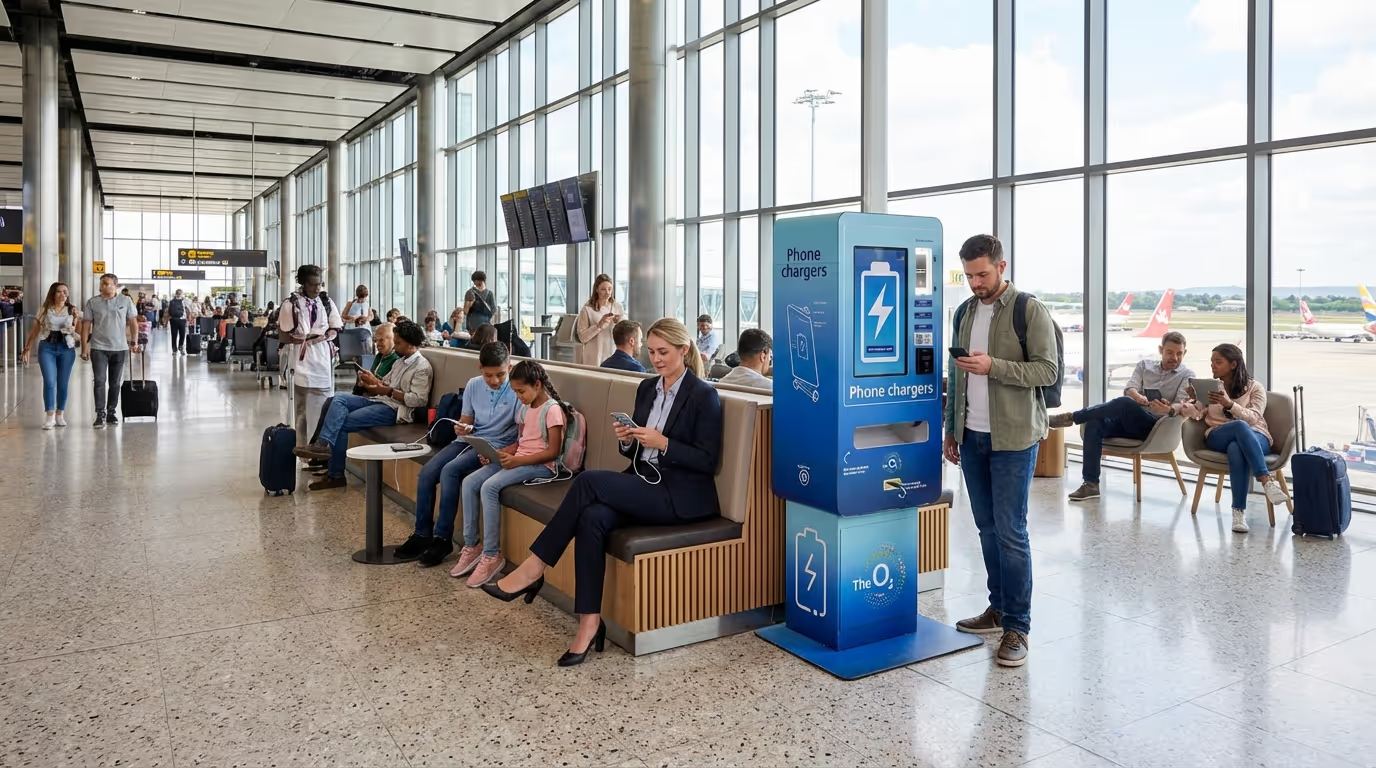
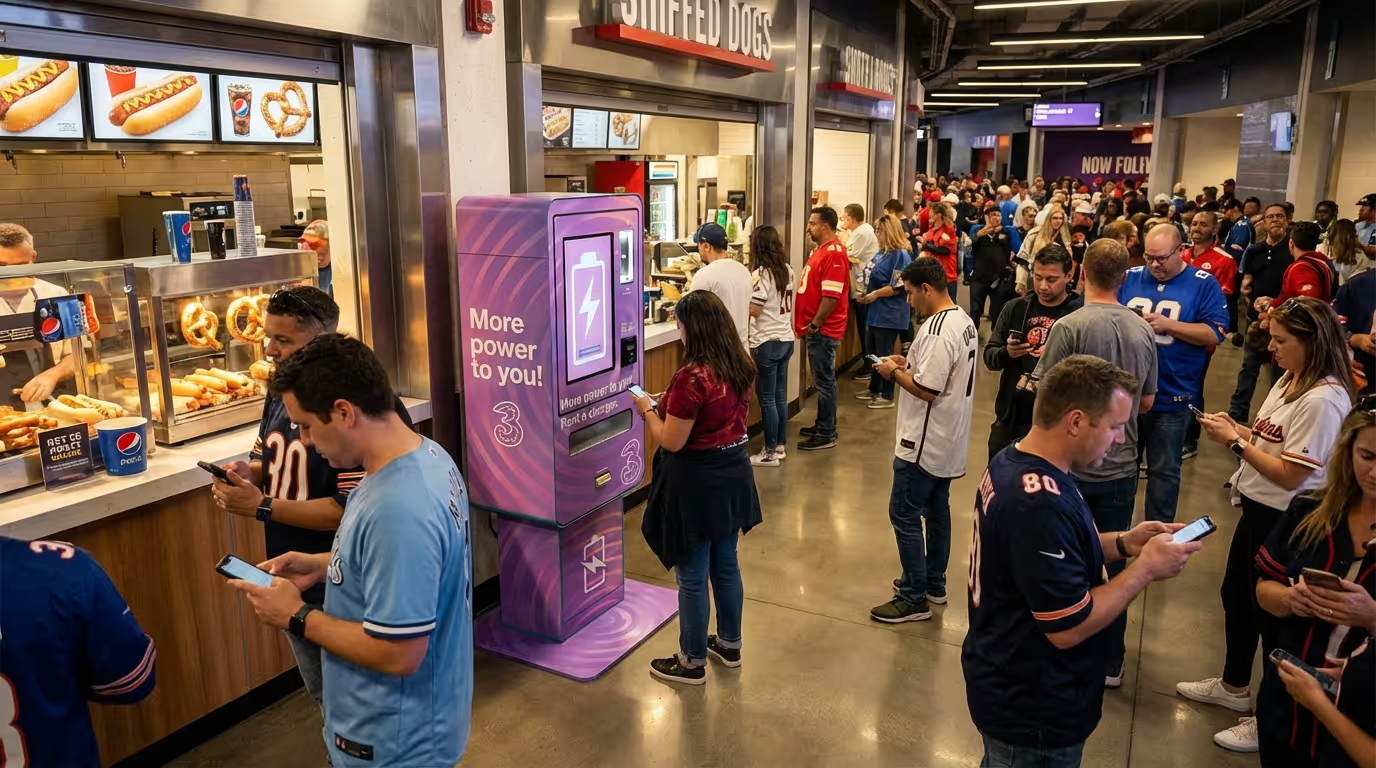
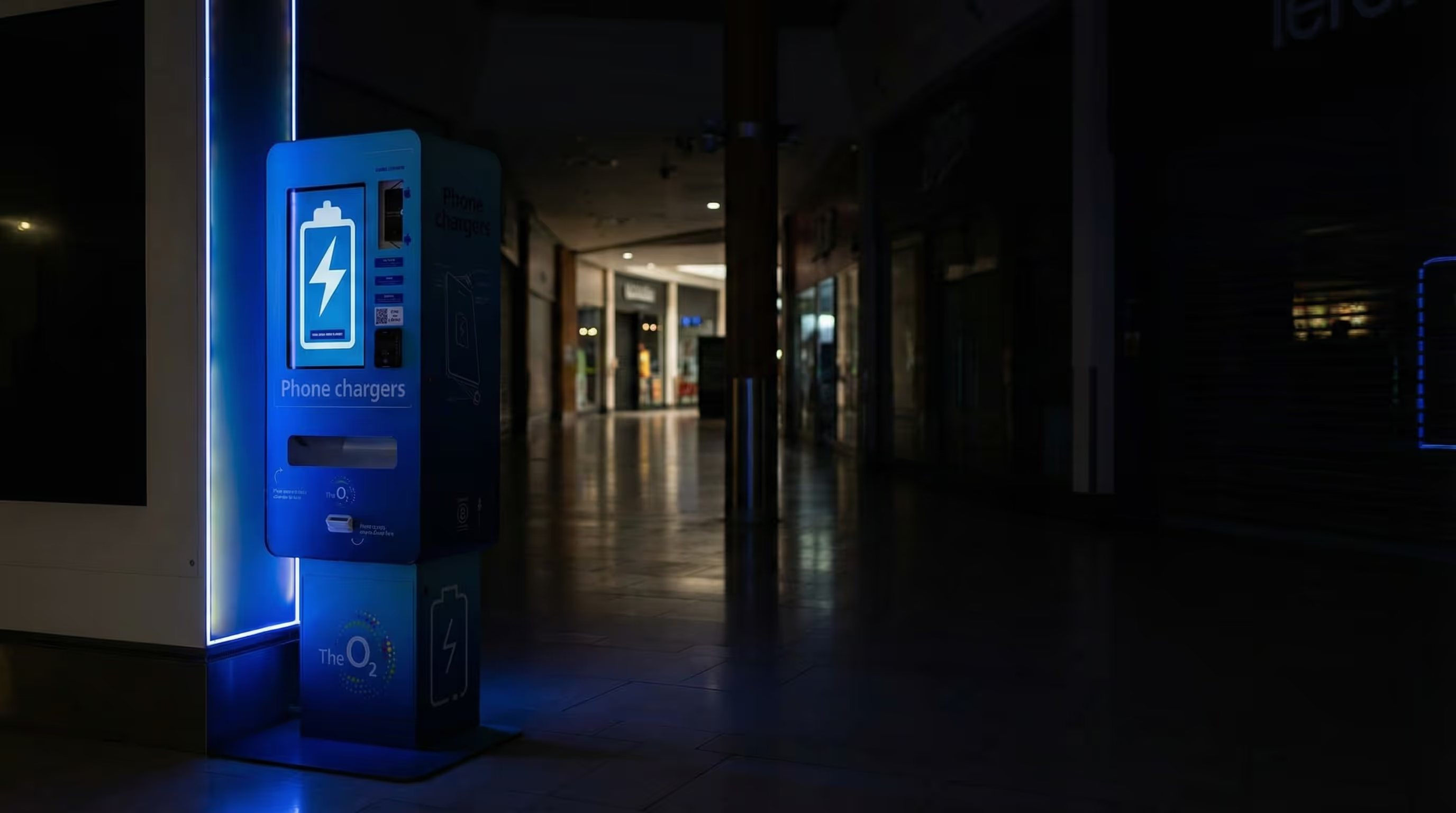
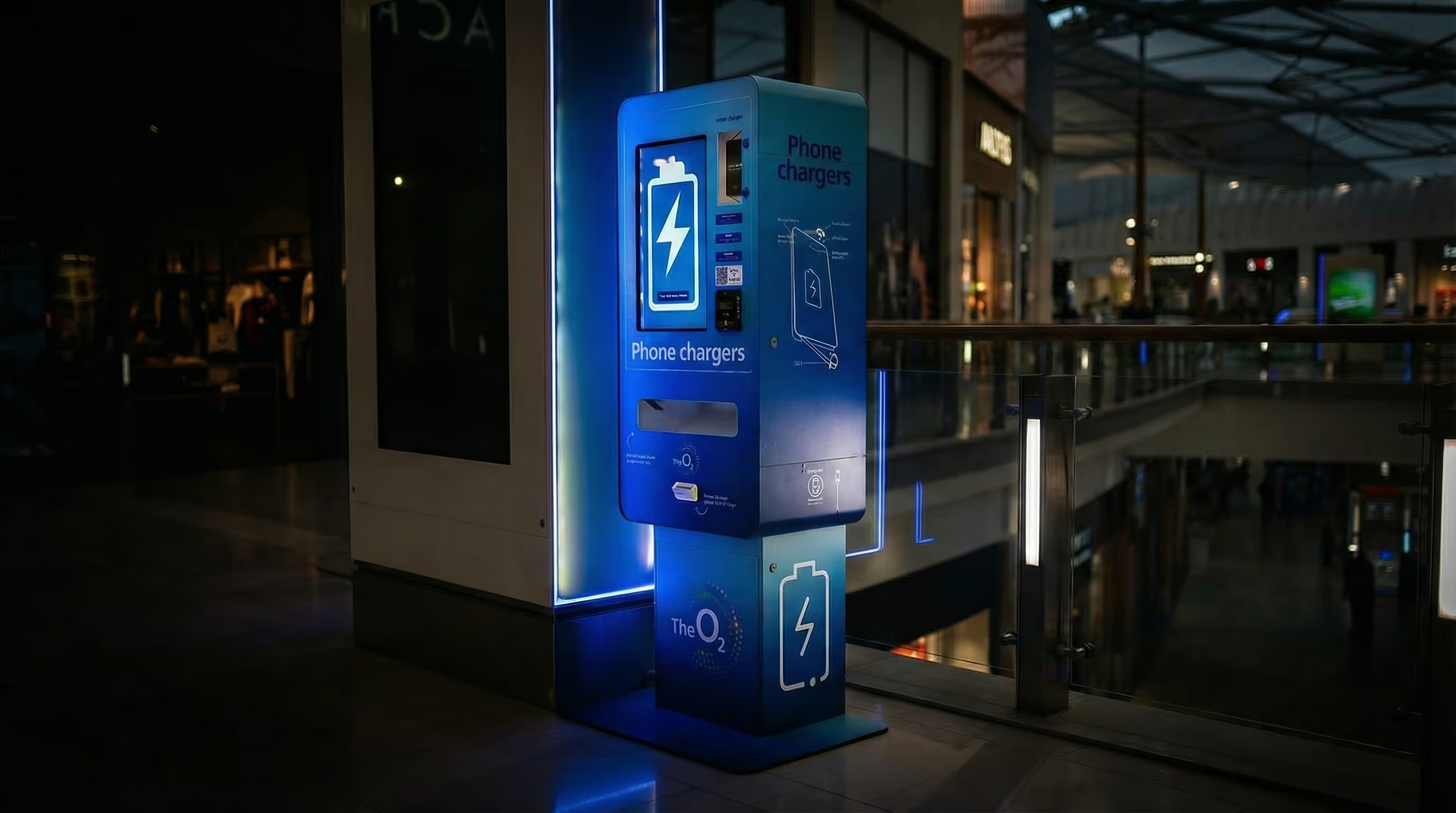
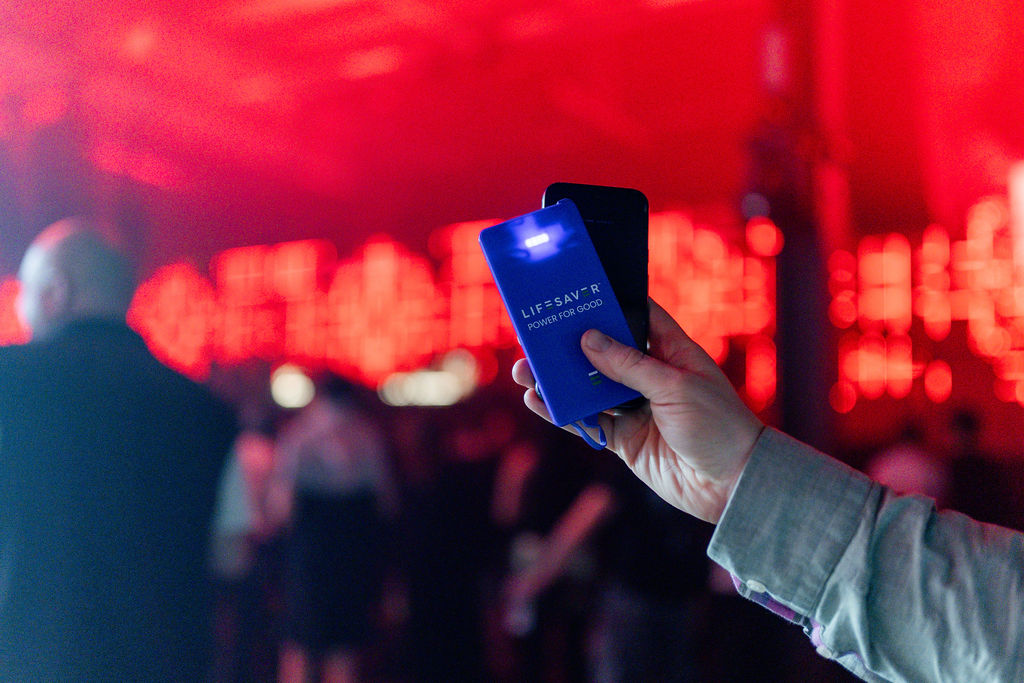
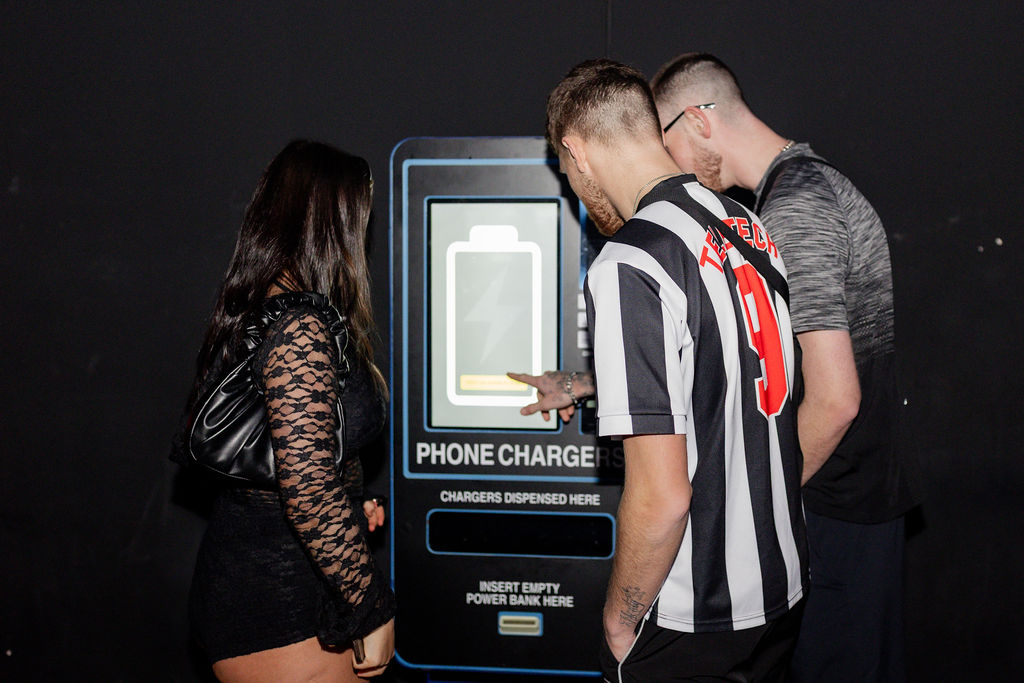
The mechanics are straightforward. A guest collects a fully charged power bank from a kiosk in the venue, pays a small deposit, and charges their phone while moving freely around the space. When they are done, they return it, either to the same venue or to any other participating location. The venue holds no liability for the device, carries no ongoing maintenance burden, and requires no staff time to manage the process.
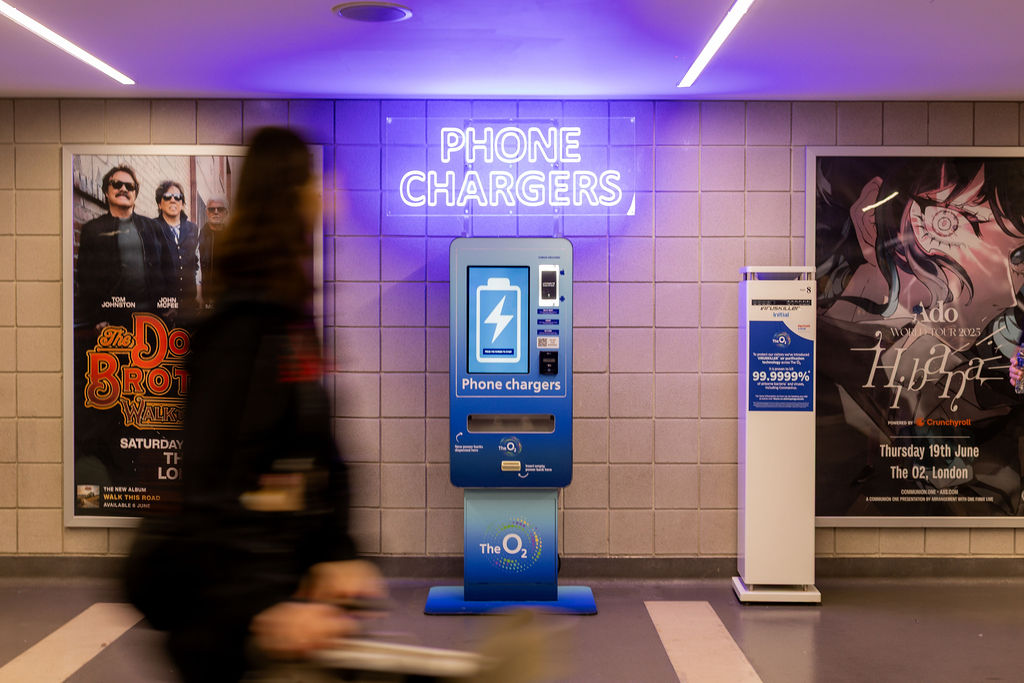
Lifesaver Power's venue charging service operates on exactly this model, deployed at high-footfall spaces including Drumsheds, one of London's largest warehouse nightclub venues. Drumsheds runs long-form shows and late-night sets for thousands of guests. Phone charging was managed with zero staff overhead and no fixed cable infrastructure.
What this removes from the venue's problem list
Fixed Cable Station
Portable Swap Model
Cables stolen regularly
No cables to steal
Requires specific connector types
Universal compatibility across devices
Guests tethered to one location
Guest moves freely with the power bank
Staff fielding charging-related requests
Fully self-managed by the guest
Ongoing maintenance and replacement costs
Maintained and replaced by the provider
Degrades through wear and spillage
Inventory refreshed by the provider
Each row represents a genuine operational friction point that the fixed model creates and the swap model eliminates entirely.
Self-managed means zero staff overhead
A well-designed portable swap system requires nothing from your team. The guest finds the kiosk, completes the transaction independently, and returns the unit when finished. There is no queue to manage, no compatibility issue to troubleshoot, no guest asking a bartender to keep an eye on their phone.
In a venue where staff are already stretched across bar service, floor management, and security, adding a zero-overhead amenity is genuinely significant. A fixed station that generates constant low-level staff interactions is a hidden cost that operators rarely account for when they install it.
The deposit model keeps inventory intact
A rental deposit gives guests a financial reason to return the power bank at the end of the night. High return rates are achievable when the system is well designed, which means the provider's inventory stays intact and the service remains consistent across every session. Fixed infrastructure, by contrast, degrades over time regardless of how well it is managed.
A portable swap model addresses that friction at the moment it arises, without asking the guest to compromise their experience to resolve it.
Charging as a Baseline Venue Provision
The question operators are increasingly asking is not whether to provide phone charging, but how to categorise it. Is it a premium add-on, a commercial service, or a basic operational provision?
The honest answer is that it is becoming the third of those. Not in the sense that it should be free, but in the sense that its absence is becoming notable in the same way that the absence of a working cloak room or a functional ticketing system would be notable. Guests are starting to expect it as part of what a well-run venue provides.
What guests now depend on their phone for, in your venue
The dependency is not abstract. Consider the practical touchpoints across a single night out where a working phone is required:
- Showing a digital ticket or membership at the door
- Paying for drinks via Apple Pay or Google Pay
- Messaging friends to coordinate across different rooms or floors
- Ordering from a table via a QR-code menu
- Photographing and posting content from the night
- Booking a ride home at the end of the evening
Each of these is a moment where a dead battery creates friction, for the guest and, in several cases, for your staff. A venue that removes that friction is not offering a luxury. It is removing a known operational problem.
The shift in operator thinking
A venue that installs a portable charging swap system is not adding a gadget. It is closing a gap in its provision that, for a significant portion of its guests, was already affecting their experience. The venues adding phone charging are doing so because the smartphone has become structurally essential to how a night out works, and a venue that does not support it is working against its own guests.
Operators looking to add portable charging without the overhead of fixed infrastructure can explore Lifesaver Power's venue solution or get in touch with the team to discuss deployment.